If you’re wondering what visiting Cobá ruins as a wheelchair user is actually like, here’s my honest experience. We booked a tour to Cobá with Cancun Accessible during our Cancun trip, and while the site was absolutely worth seeing, the terrain was one of the roughest we’ve dealt with on an accessible excursion. This guide breaks down the what to know before you go.
Getting There: Transportation to Cobá from Cancún
Cancún Accessible picked us up at 8 a.m. in their fully accessible van with tie-downs and plenty of room for our group of two power wheelchairs and two able-bodied friends. It's about a two-hour drive from Cancún to Cobá, so I alternated between listening to my audiobook and taking a nap for most of the ride.
When we arrived, we met our tour guide and headed in. Cancun Accessible had cold water bottles ready for us, which was a genuinely appreciated touch in that kind of heat.
The Entrance Path
The entrance to Cobá is rough. I want to be upfront about that because it's the part of the visit that will matter most to wheelchair users. The first 60 to 70 feet of the path are covered in large, uneven rocks with exposed tree roots throughout. My EZ lock on the bottom of my chair got stuck repeatedly, and I left some marks in Cobá that will be there for quite some time. I needed help multiple times to get unstuck, and at one point a family of bystanders stopped to help get me over a particularly stubborn tree root. Life is certainly an adventure sometimes!
My friend also held my head at points to support my neck from the bouncing, which is worth knowing if you have similar needs. It's a lot of movement in a short stretch.
The good news is that the entrance is the hardest part of the whole day. Once you're through it, things open up considerably.
The Main Paths and Getting Around the Site
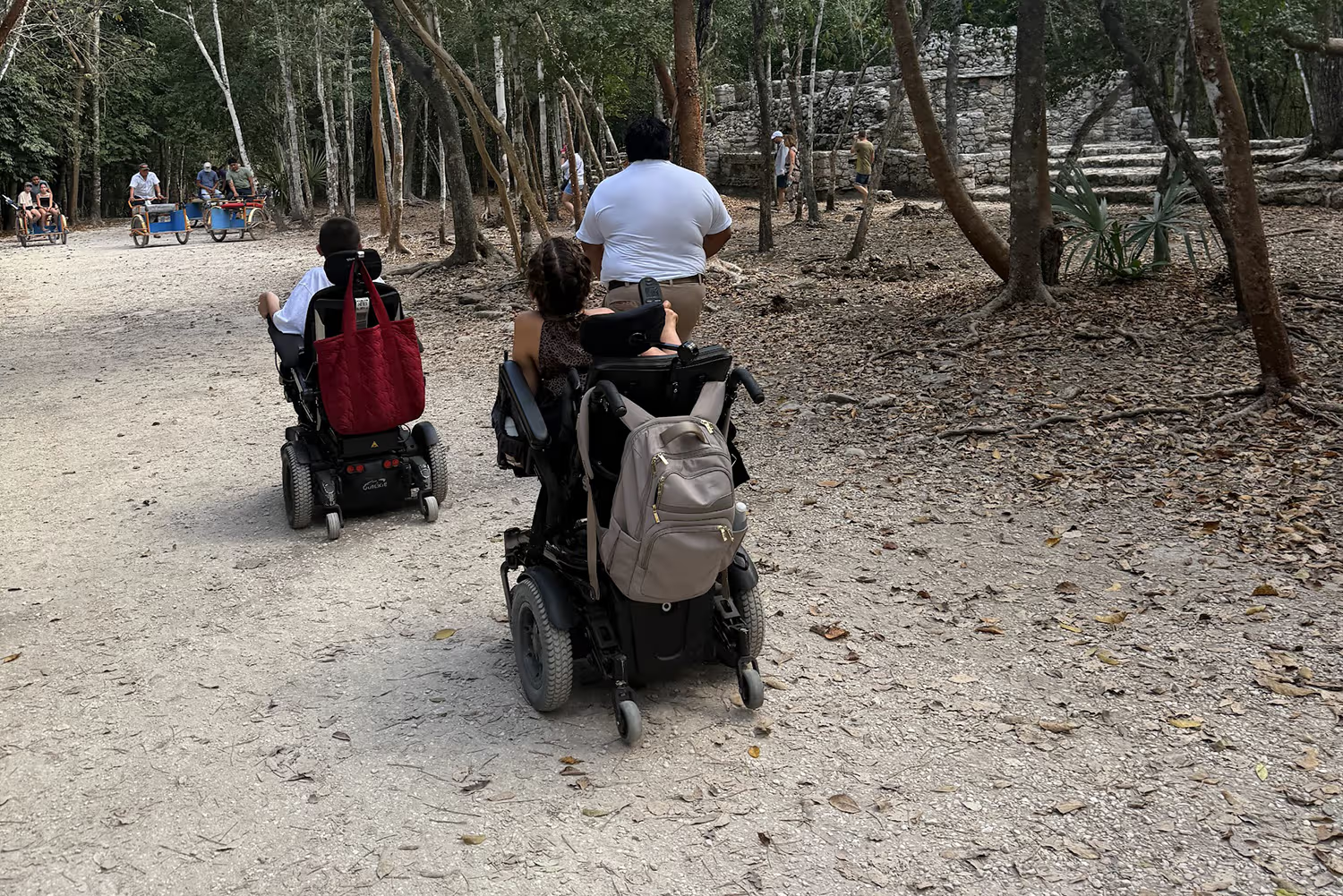
Once you clear the entrance, the paths through the site are dirt with scattered stones and tree roots throughout. There's no part of the route I'd describe as smooth, but it's noticeably more manageable than the entrance.
The main path to the pyramid is about 4 kilometers round trip. For most visitors, bikes and bike taxis are available to rent, but those require a transfer, so that wasn't a realistic option for us. We rolled the whole way. The saving grace is that the entire site is covered by jungle canopy, so even though it was hot, we were in consistent shade throughout.
What You'll See Along the Way
One of the things that makes Cobá interesting compared to other Mayan sites is that it's not just one big pyramid surrounded by an open plaza. The entire site is spread across the jungle, and the paths connecting everything are actually the original sacbe, which are raised white limestone roads the Mayans built to connect their temples, plazas, and residential areas. Cobá has one of the most extensive sacbe systems of any Mayan city, with over 50 of them documented at the site, including a portion of the longest known ancient road in Mesoamerica stretching over 60 miles.
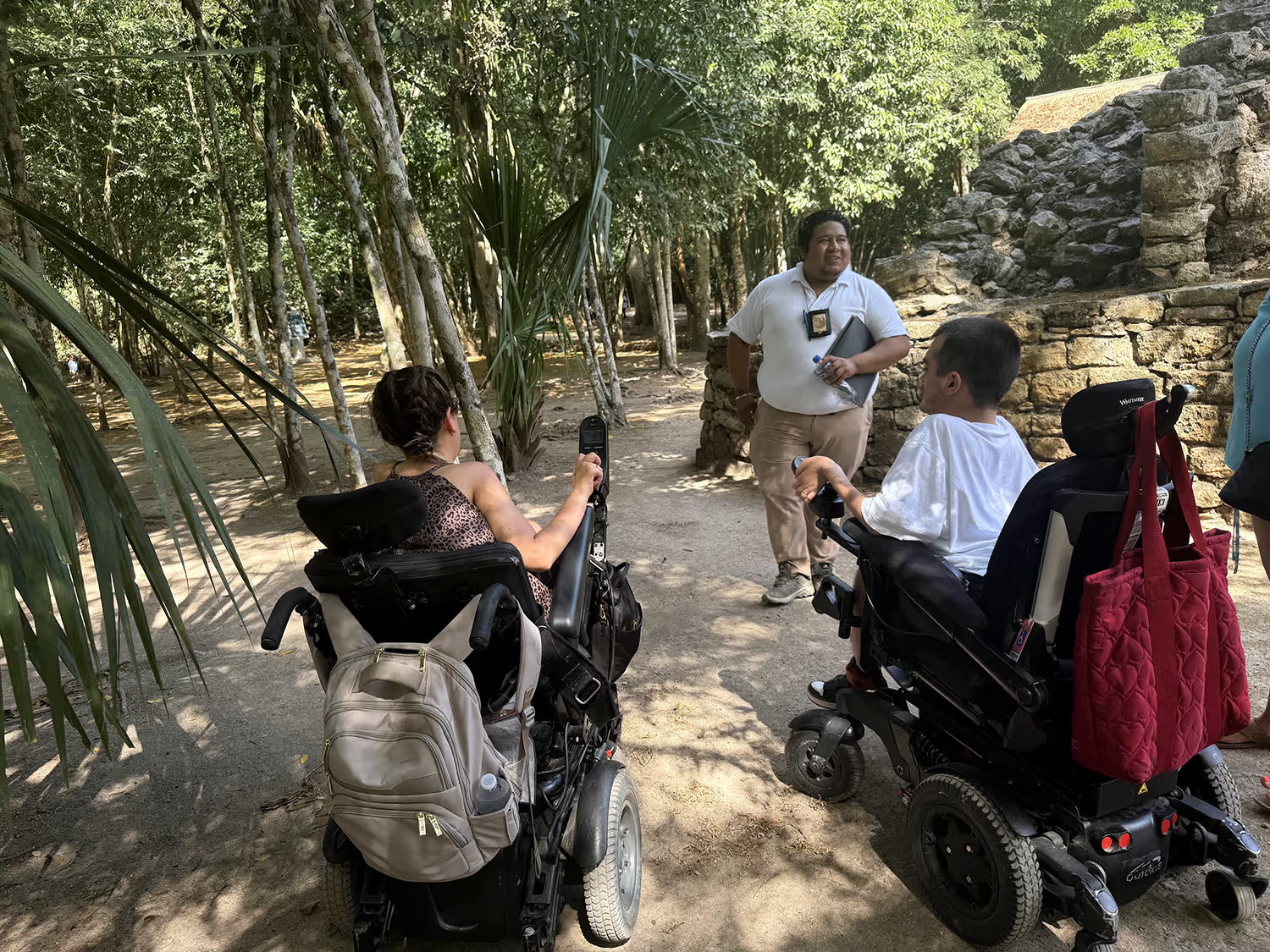
Our guide was of Mayan descent, which made the whole experience feel more meaningful than your standard tourist excursion. He walked us through the history of the site, explained what different structures were used for, and even taught us some Mayan words along the way.
The Ball Courts
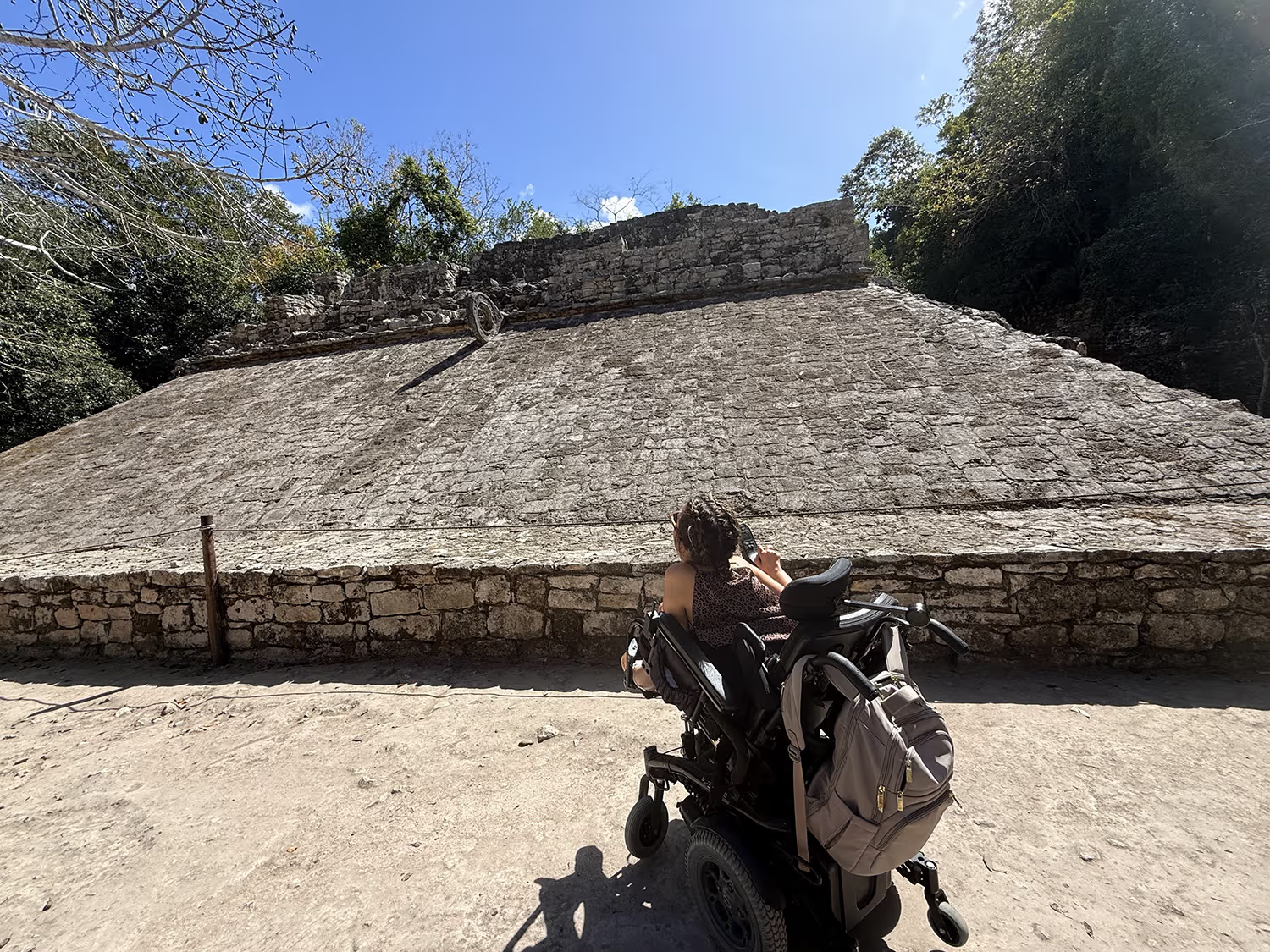
Two ball courts are located within the site, and they were one of my favorite parts of the visit. The Mayans played a game called Pok-ta-pok here, which our guide described as a mix of basketball and soccer, except you could only use your hips, thighs, and knees. No hands, no feet. The ball itself was made of solid rubber. The courts have sloping sides rather than vertical walls and still have their original stone ring markers intact. There's also a dark side to the history: it's believed that the winning team's captain was sacrificed to the gods after the game, which changes how you look at the whole thing.
The Stelae
Scattered throughout the site are large carved stone monuments called stelae. These were used to record Mayan history, including important events, rulers, and religious ceremonies. One of the more interesting details our guide shared is that several of the stelae at Cobá depict women in positions of power, which suggests the city may have had female rulers at various points. Some historians believe Cobá was actually ruled by a queen for a period of time.
Wildlife
The jungle is alive around you the entire walk. We spotted wild turkeys, various birds, and the stingless bees that the Mayans keep to produce a honey-based liqueur called Xtabentun. The guide made a point of telling us the bees don't sting, which I appreciated knowing before they were six inches from my face.
The Main Pyramid: Nohoch Mul
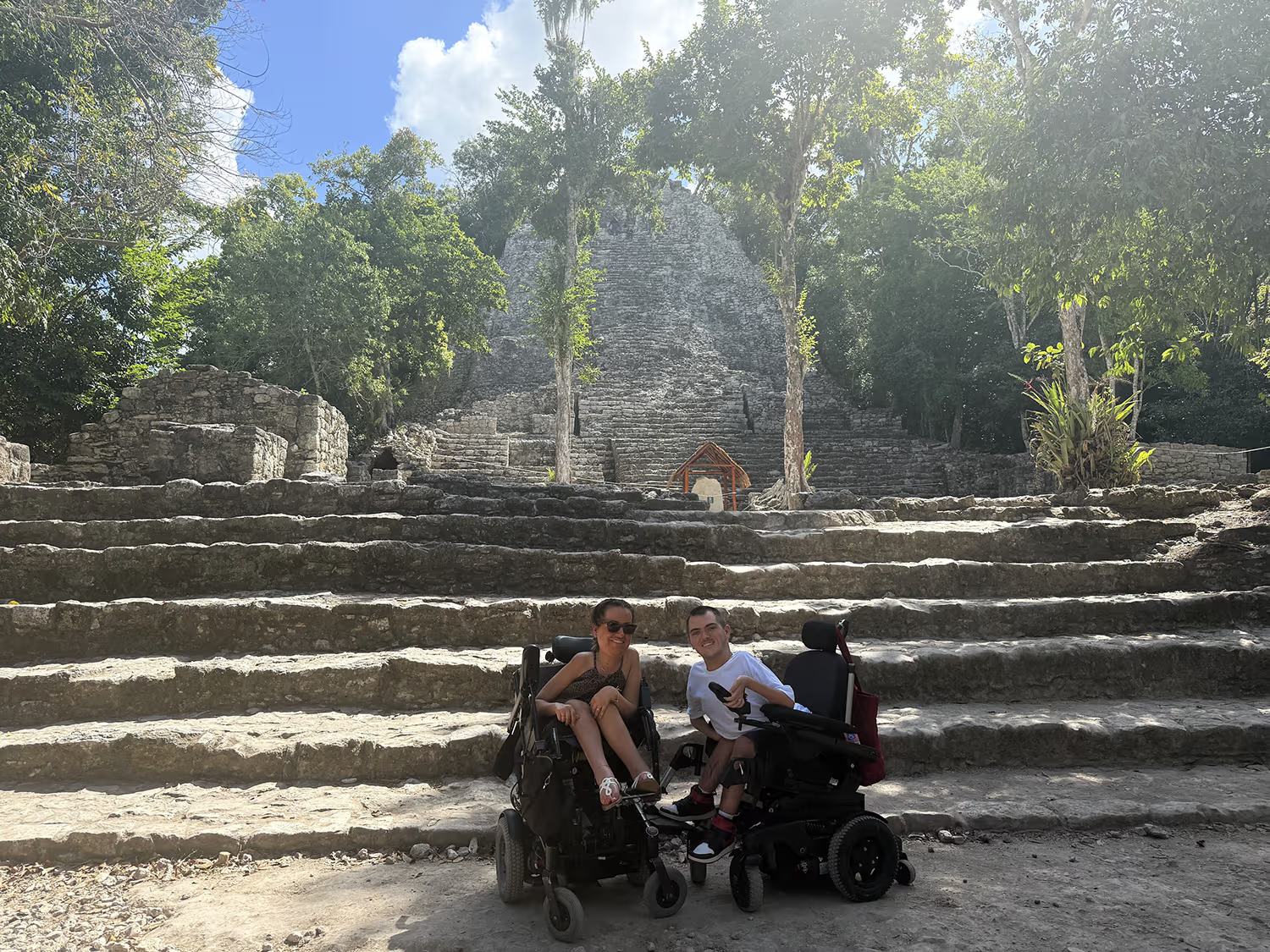
After about an hour and a half of rolling through the jungle, we reached Nohoch Mul, the main pyramid at Cobá. At roughly 137 feet tall, it's actually taller than the main pyramid at Chichen Itza and is the second tallest in the Yucatan Peninsula. Unlike Chichen Itza, you can still climb it, though no one in our group took on the 120 steps.
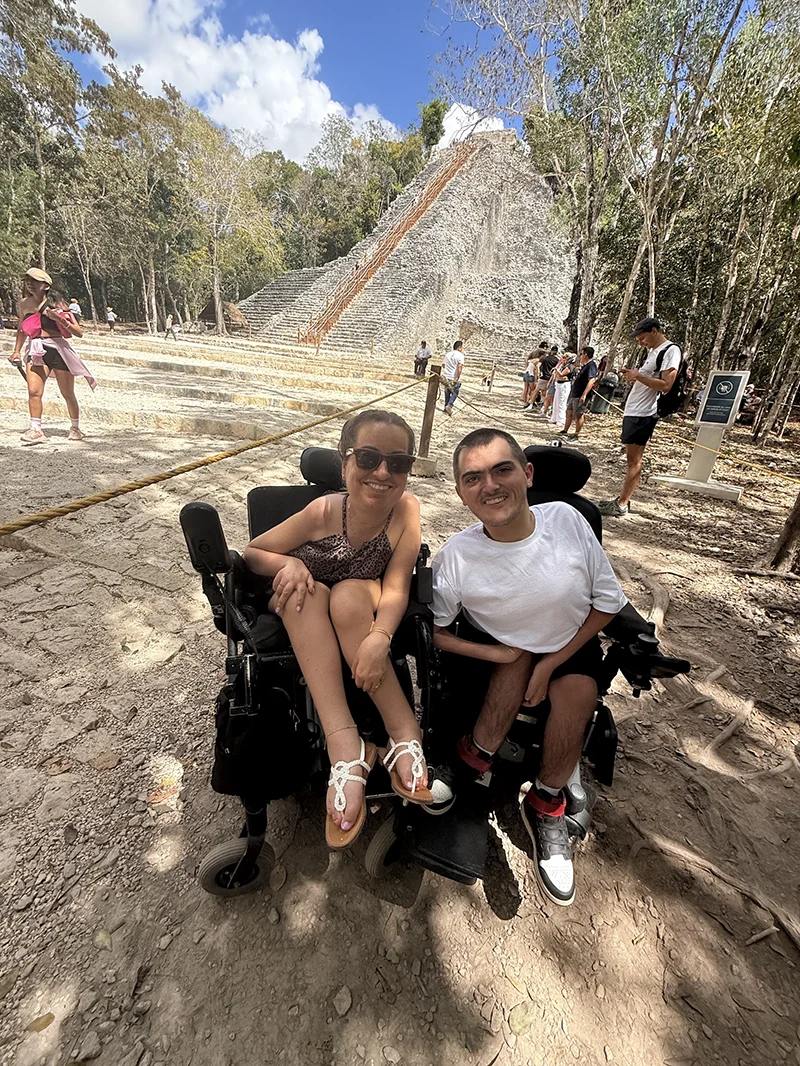
The area around the base is also where the line forms for people waiting to climb, so the crowd is concentrated there. The last stretch approaching the pyramid is rockier and we didn't push much closer than where we comfortably landed. It's still an impressive thing to stand in front of after that journey through the jungle to get there.
There's a drink stand nearby once you reach the pyramid area, so if you didn't bring enough water, you can restock there before heading back.
Can You See Coba Ruins in a Wheelchair?
Cobá is not the most accessible site I've ever visited. The terrain is challenging and I needed real help at multiple points to get through it. But getting to roll through an actual Mayan jungle, stop at ball courts that are over a thousand years old, learn from a guide whose ancestors built what you're looking at, and come out the other side at one of the tallest pyramids in the Yucatan is a pretty remarkable afternoon. I'm glad we did it.
If you have questions about wheelchair accessibility at Cobá, drop them in the comments and I'm happy to share more.
Psst, FYI – this post may contain affiliate links, which means I earn a small commission (at absolutely no extra cost to you). This helps keep Roamable running and supports more accessible travel guides like this!
Just a reminder: I'm sharing my personal experience as a wheelchair user, and accessibility can change. Always confirm details directly with venues before visiting. Thanks for supporting accessible travel! ✨